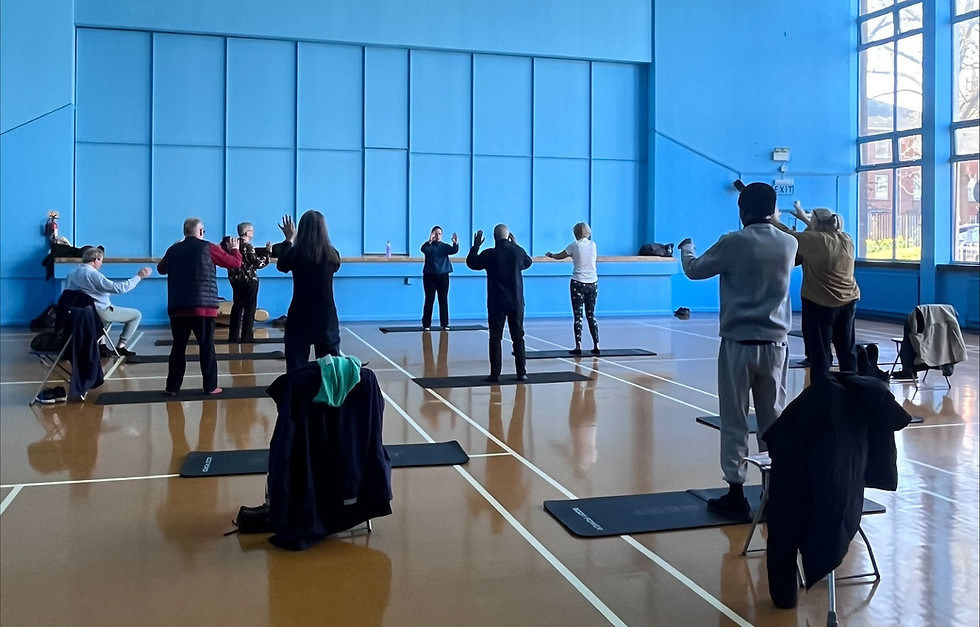
Move and meditate with Hanna! Carers/relatives can join
Tai Chi involves large movements, which help to combat the smaller movements that affect people with Parkinson's. The breathing techniques can also help to combat anxiety. Tai Chi has been advocated for a long time for people with Parkinson's.
Since we started Tai Chi it has continued to grow in popularity and may now be our most popular class. Don't forget to join us for a coffee after class!
A Cochrane review, one of the most robust types of medical evidence, published in 2023 showed that Tai Chi may have a small effect on motor symptoms and a moderate effect on quality of life. To read the review, follow the link:
cochranelibrary.com/cdsr/doi/10.1002/14651858.CD013856.pub3/pdf/full
Fuzail says:
"Since being diagnosed by my neurologist in October 2025, it was recommended that I look into these classes. My GP kindly provided me with the location and details and I have been attending every Tuesday since.
I absolutely love the community here. The instructor Hanna is incredibly friendly and professional, and everyone is so welcoming. Since starting I have felt a completely new spirit inside me and have noticed massive improvements in my mobility. It has also greatly helped with balance and feeling steadier on my feet. I look forward to it every week!"
David says:
"Since joining the Tai Chi group sessions with Hanna, I’ve found them to be very calming. She patiently takes us through the various movements, many of which have been helpful in maintaining flexibility and balance."
When: Tuesdays, 2:15 - 3:00pm
Where: Sportshall at Charing Cross Sports Club, Aspenlea Road, W6 8LH
Nearest Tube station: Hammersmith/Baron's Court
Cost: £5 - pay by card, at reception
Registration: no need to pre-register; just show up!
Best for: those new to exercise or looking for chair-based exercises
Tai Chi
Gerry says:
"Following my diagnosis with PD 3 years ago, my consultant neurologist strongly advised prescribed medication along with regular, structured physical exercise. In particular, movement-based Tai Chi.
Since then, together with other members, I have seen Power Up Parkies grow steadily towards regular, engaged attendance led by its' own qualified leader. Members come and go but numbers stay encouragingly consistent, not least when members find themselves sharing friendly ideas and discussion. A cup of coffee, followed by a walk to the bus stop, with someone who recognises PD symptoms or has recently heard a good joke, humanises the condition to everyone's advantage.
Ask any group member why they bother to undertake a weekly journey involving two buses and an underground train, whatever the weather, and you will hear familiar responses: 'to practice the movement...to hear how others cope...to find out how others are getting on'."